Compsognathus longipes
Discover fascinating facts about Compsognathus, including its size, appearance, diet, hunting abilities, fossil discoveries and life in Late Jurassic Europe
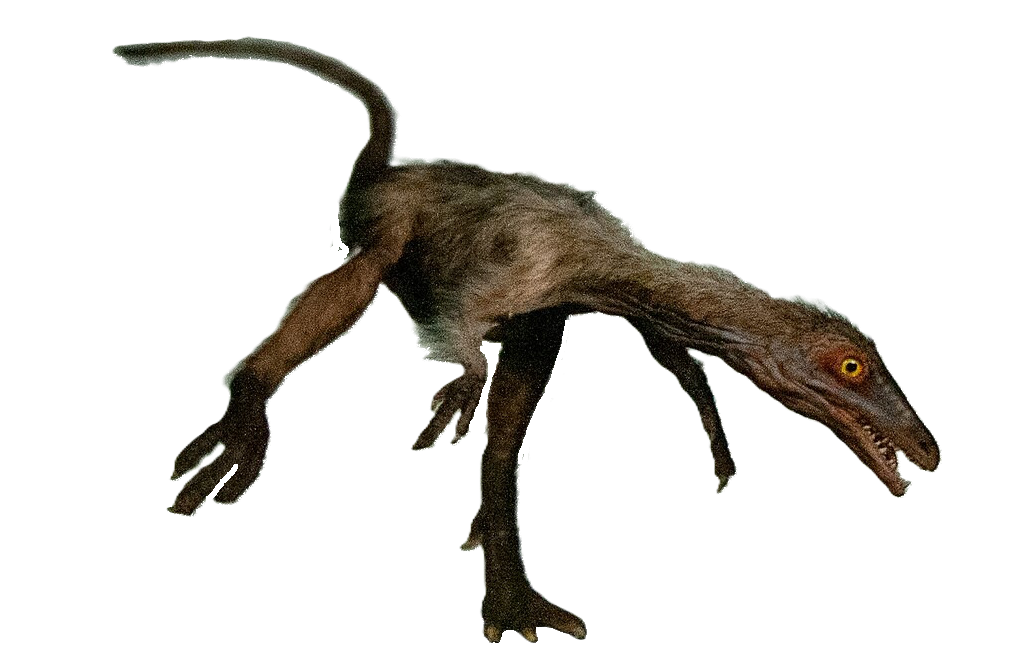
Compsognathus was a small, meat-eating dinosaur that lived in Europe during the Late Jurassic Period, approximately 150 to 145 million years ago. Its name means “elegant jaw,” referring to the delicate structure of its jaws. The best-known species is Compsognathus longipes, which measured around 1 metre in length, although some estimates suggest that larger individuals may have reached approximately 2 metres. It weighed about 2 to 3 kilograms, making it one of the smallest known dinosaurs. Its lightweight body, slender build, small head, short forelimbs and long hind legs made it well suited to moving quickly on two feet. An unusually long tail extended behind its body, helping it maintain balance while running and changing direction. Despite its small size, Compsognathus was an active predator capable of catching small animals in its environment.
One of the most distinctive features of Compsognathus was its narrow, elongated skull, which contained numerous small, pointed teeth. These teeth were designed for gripping and holding prey rather than chewing or grinding food. Its diet mainly consisted of small vertebrates, particularly lizards, as confirmed by fossil remains discovered inside the abdominal region of specimens. One particularly famous fossil preserves the remains of a small lizard, providing direct evidence of its feeding habits. Its short forelimbs ended in three clawed fingers, which may have helped it grasp or hold struggling prey. However, its powerful jaws and sharp teeth were likely its main tools for capturing food. Its long hind limbs supported its lightweight body and allowed it to move rapidly across the landscape. Although no definite feathers have been preserved on the known Compsognathus skeletons, several closely related theropod dinosaurs had feather-like coverings. This has led some scientists to suggest that Compsognathus may also have possessed simple feathers, although this remains unconfirmed.
The first known Compsognathus fossil was discovered in the late 1850s near Solnhofen in Bavaria, Germany. The specimen came into the possession of fossil collector Joseph Oberndorfer and was subsequently examined by German palaeontologist Johann A. Wagner, who formally described the dinosaur as Compsognathus longipes in 1859. For many years, this remained the only recognised specimen of the genus. A second, larger skeleton was discovered near Canjuers in southeastern France in 1971. It was initially classified as a separate species, Compsognathus corallestris, but later research generally treated it as belonging to Compsognathus longipes. These remarkably preserved fossils have provided valuable information about the dinosaur's anatomy, movement and feeding habits. In particular, the preserved lizard remains offer rare direct evidence of what this small Jurassic predator ate, making Compsognathus an important dinosaur for understanding the ecology of prehistoric Europe.
Compsognathus lived in Bavaria (Germany).
Compsognathus is known to have been living in Europe, specifically in Germany and France. The first fossil remains were found in Germany, Bavaria in the 1850s, while the second and larger specimen was found in southeastern France around 1971. These specimens are particularly important as they provide considerable information about the skeletal structure and diet of the dinosaur.
Taxonomy
Select a rank to explore where Compsognathus fits in the classification.