Chilesaurus diegosuarezi
Discover fascinating Chilesaurus facts, including its size, herbivorous diet, unusual anatomy, fossil discovery in Chile and the scientific mystery surrounding its evolutionary classification
Chilesaurus diegosuarezi was an unusual herbivorous dinosaur that lived in South America during the Late Jurassic Period, approximately 150 million years ago. Its name combines Chile, the country where its fossils were discovered, and Diego Suárez, the seven-year-old boy who first found its remains. This dinosaur measured around 3 metres in length, although some discovered specimens were considerably smaller because they belonged to juveniles. Unlike most theropods, which were meat-eating predators, Chilesaurus had adapted to a plant-based diet. It walked on two legs and possessed a small skull, a relatively long neck, short forelimbs and an elongated tail that helped maintain balance. Its unusual combination of physical characteristics initially made it difficult for scientists to determine exactly where it belonged in the dinosaur family tree.
One of the most interesting features of Chilesaurus was its unusual skull and specialised teeth. Unlike predatory theropods such as Allosaurus, which had long, sharp teeth for tearing flesh, Chilesaurus possessed shorter, leaf-shaped teeth suited to cutting and processing vegetation. Its jaws were adapted for feeding on plants rather than capturing prey. Its relatively long neck may have helped it reach vegetation at different heights, while its short forelimbs ended in blunt claws rather than the strongly curved claws commonly associated with predatory theropods. Another remarkable feature was its pelvis, which had a backward-pointing pubic bone resembling the pelvic structure found in many ornithischian dinosaurs, including Stegosaurus. However, other parts of its skeleton displayed characteristics associated with theropods and some early long-necked dinosaur groups. This unusual mixture of anatomical features made Chilesaurus particularly important for understanding dinosaur evolution.
The first Chilesaurus fossils were discovered in 2004 in the Aysén Region of southern Chile. The discovery was made by Diego Suárez while exploring the area with his family. His parents were geologists conducting research on the region's geological formations. Further excavations revealed additional fossil remains, including specimens representing different stages of growth. In 2015, palaeontologist Fernando Novas and his research team formally described the dinosaur in a scientific paper published in the journal Nature. The discovery attracted considerable attention because its skeleton combined features previously associated with several different dinosaur groups. Initially classified as an unusual herbivorous theropod, Chilesaurus became the subject of further scientific debate. In 2017, another study proposed that it might instead belong to Ornithischia, the group containing many familiar plant-eating dinosaurs. Its exact evolutionary position has continued to attract scientific discussion.
Chilesaurus inhabited the ancient landscapes of present-day Patagonia, where rivers, vegetation and other natural resources supported a diverse prehistoric ecosystem. As a herbivore, it obtained its food from plants rather than hunting other animals. Its relatively small body, specialised teeth and unusual feeding adaptations distinguished it from many larger Jurassic dinosaurs. One particularly fascinating aspect of Chilesaurus is that it demonstrates how dinosaurs could develop physical characteristics associated with different evolutionary groups. Scientists continue to examine its fossilised bones to understand how these unusual features evolved and what they reveal about the relationships between different dinosaur lineages. Its discovery remains an important example of how a single fossil find can challenge existing ideas about dinosaur evolution and classification.
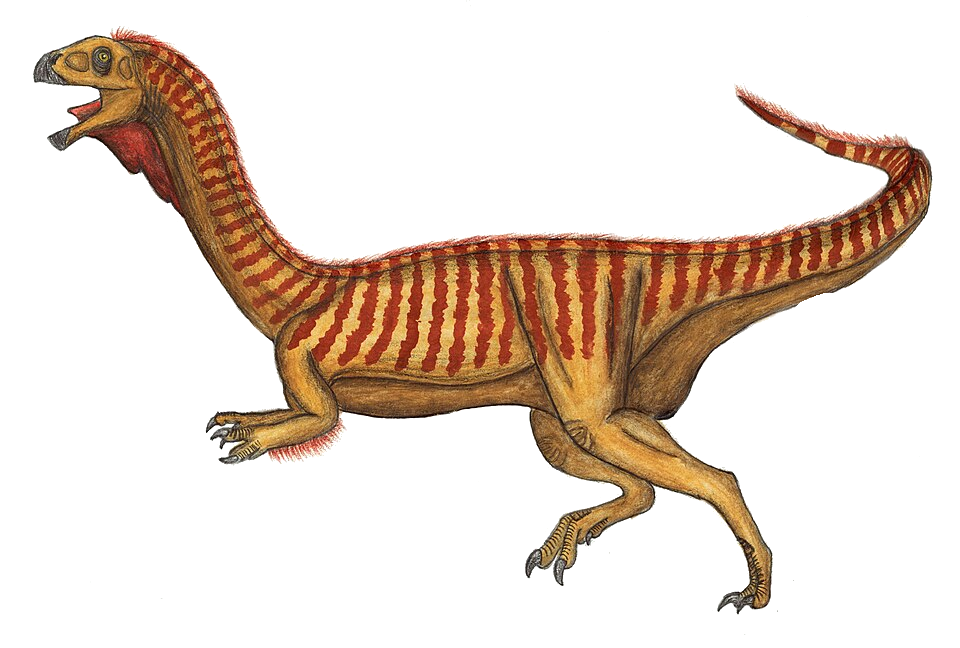
Chilesaurus lived in Aysén (Chile).
Chilesaurus was a dinosaur that existed in South America’s southern region of Chile, specifically in Patagonia close to General Carrera Lake. Fossils of Chilesaurus were discovered in the year 2004 by Diego Suárez, who was only seven years old at the time of discovery. Chilesaurus was named in 2015 as Chilesaurus diegosuarezi.
Taxonomy
Select a rank to explore where Chilesaurus fits in the classification.