Ceratosaurus nasicornis
Explore fascinating Ceratosaurus facts, including its size, weight, sharp teeth, distinctive nasal horn, hunting behaviour, Jurassic habitat and fossil discoveries
Ceratosaurus was a carnivorous theropod dinosaur that lived in North America during the Late Jurassic Period, approximately 155–145 million years ago. Its name means “horned lizard”, referring to the distinctive horn-like structure on its snout. The best-known species is Ceratosaurus nasicornis. An adult Ceratosaurus measured around 7 metres in length and weighed approximately one tonne, although estimates vary depending on the specimen being studied. It moved on two powerful hind legs and had a long, muscular tail that helped maintain balance while running and turning. Its body was relatively robust, with a large skull, strong jaws and sharp teeth adapted for catching and consuming prey. As a theropod, it was primarily a meat-eater rather than an omnivore, although the precise composition of its diet remains uncertain.
One of the most distinctive features of Ceratosaurus was the prominent horn-like projection on its nose, accompanied by smaller raised structures above its eyes. These features gave its skull an unusual appearance compared with many other large theropods. Scientists have suggested that the nasal horn and facial structures may have been used for visual display, species recognition or interactions between individuals. However, their exact purpose is still debated. The nasal horn was probably not strong enough to function as a major weapon during combat. Another unusual characteristic was the presence of small bony plates, known as osteoderms, along the back of at least one exceptionally preserved specimen. These structures were embedded within the skin and are relatively uncommon among large theropod dinosaurs. Ceratosaurus also possessed long, curved teeth with serrated edges, which were well suited to gripping and tearing flesh. Its combination of facial horns, powerful jaws and bony skin plates makes it one of the more easily recognisable predators of the Jurassic Period.
The first known Ceratosaurus remains were discovered in 1883 by fossil collector Marshall Parker Felch in the Garden Park area near Cañon City, Colorado, United States. American palaeontologist Othniel Charles Marsh formally described and named the dinosaur in 1884. The discovery was particularly important because the specimen included a relatively complete skeleton, providing valuable information about the anatomy of this previously unknown theropod. Additional fossils have since been recovered from several locations in the western United States, including Utah and Wyoming. Possible Ceratosaurus remains have also been reported from Portugal, suggesting that closely related or potentially similar animals may have lived in parts of Europe. However, these European fossils require careful examination because incomplete remains can make accurate identification difficult. The available discoveries have helped researchers understand the dinosaur's physical characteristics, distribution and evolutionary relationships.
Ceratosaurus inhabited landscapes that included floodplains, river systems, wetlands and wooded areas. These environments provided access to different types of prey and supported a diverse community of Jurassic animals. Other well-known dinosaurs that shared parts of its North American habitat included Allosaurus, Torvosaurus and Stegosaurus. As a predator, Ceratosaurus likely hunted smaller dinosaurs and other vertebrates. Some researchers have also suggested that fish and aquatic animals formed part of its diet, possibly reflecting its association with river environments. Its teeth and jaws were suitable for consuming animal prey, but the precise balance between terrestrial and aquatic food sources remains unknown. The presence of several large predators in the same ecosystem raises interesting questions about competition for food. Differences in body size, hunting strategies, preferred prey and habitat use may have helped these carnivores coexist. Ceratosaurus therefore provides an interesting example of how different large predators occupied the same Jurassic ecosystems.
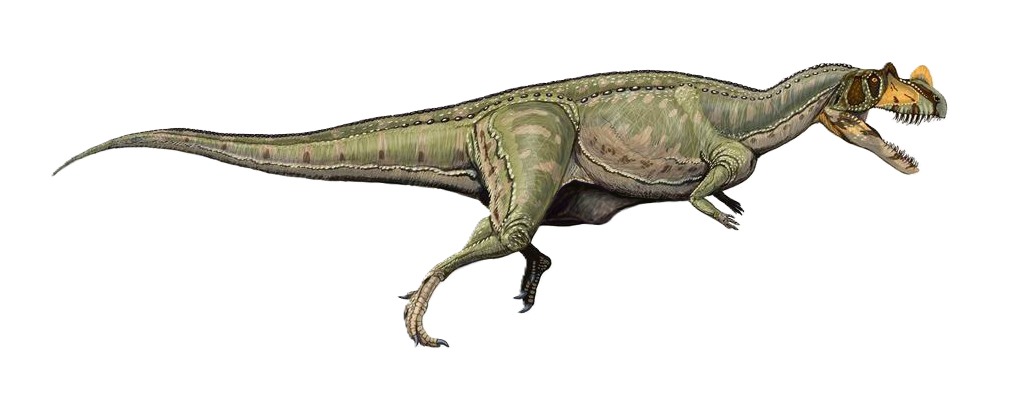
Ceratosaurus lived in USA, Portugal, Switzerland.
Ceratosaurus existed in the areas that form present-day North America and even in Europe. Ceratosaurus fossil remains have been unearthed in the US and Portugal. The remains were discovered in 1883 by Marshall Parker Felch in Colorado. The name Ceratosaurus was officially given to the species by paleontologist Othniel Charles Marsh in 1884. Ceratosaurus lived in the areas that formed the Morrison Formation alongside other dinosaurs like Allosaurus and Stegosaurus.
Taxonomy
Select a rank to explore where Ceratosaurus fits in the classification.