Centrosaurus apertus
Discover Centrosaurus, a horned herbivorous dinosaur known for its prominent nasal horn, distinctive neck frill, plant-based diet and remarkable fossil bonebeds
Centrosaurus was a herbivorous dinosaur that lived in North America during the Late Cretaceous Period, approximately 76–74 million years ago. Its name means “pointed lizard”, referring to the distinctive pointed structures on its neck frill. The best-known species is Centrosaurus apertus. This dinosaur measured approximately 5–6 metres in length and weighed an estimated 1–2.5 tonnes. It had a bulky body, strong limbs and a relatively short tail. Like other ceratopsians, Centrosaurus walked on all four legs and possessed a large skull with a distinctive arrangement of horns and a bony frill. Its mouth featured a toothless beak at the front, which helped it crop vegetation, while rows of specialised teeth towards the back of its jaws were used to cut and grind plant material.
One of the most recognisable features of Centrosaurus was its prominent nasal horn, which projected upwards from its snout. Its skull also featured a broad, backward-extending neck frill with openings that helped reduce its weight. Along the outer edges of the frill were smaller horn-like projections, giving its head an impressive appearance. The combination of its nasal horn, smaller facial horns and elaborate frill made Centrosaurus particularly distinctive among horned dinosaurs. Scientists believe these structures may have served several purposes, including visual identification, communication and display during interactions with other members of the species. They may also have played a role in competition between individuals. However, their exact functions remain uncertain, and it is possible that different structures served different purposes. As a plant-eater, Centrosaurus relied on its powerful jaws and specialised teeth to process tough vegetation. Its strong, sturdy limbs supported its heavy body as it moved through its habitat in search of food.
The first recognised fossils of Centrosaurus were discovered in Alberta, Canada, during the early twentieth century. Canadian palaeontologist Lawrence Lambe formally named and described Centrosaurus apertus in 1904. Since then, numerous additional specimens have been recovered, particularly from the Dinosaur Park Formation in Alberta. These discoveries include skulls, horns, frills and bones from different parts of the skeleton, providing valuable evidence about the dinosaur's anatomy and development. Among the most remarkable discoveries are extensive fossil bonebeds containing the remains of hundreds, and sometimes thousands, of Centrosaurus individuals. These deposits are particularly important because they provide clues about the possible social behaviour and population structure of the species. The large concentrations of remains have led researchers to suggest that Centrosaurus may have travelled in herds. Some bonebeds may represent groups that died together during catastrophic environmental events, such as severe flooding. Although these explanations are plausible, the circumstances behind individual deposits are not always clear. The abundance of fossils also allows scientists to examine changes in skull shape, horn development and body proportions as these dinosaurs grew, making Centrosaurus an important species for understanding the evolution and biology of horned dinosaurs.
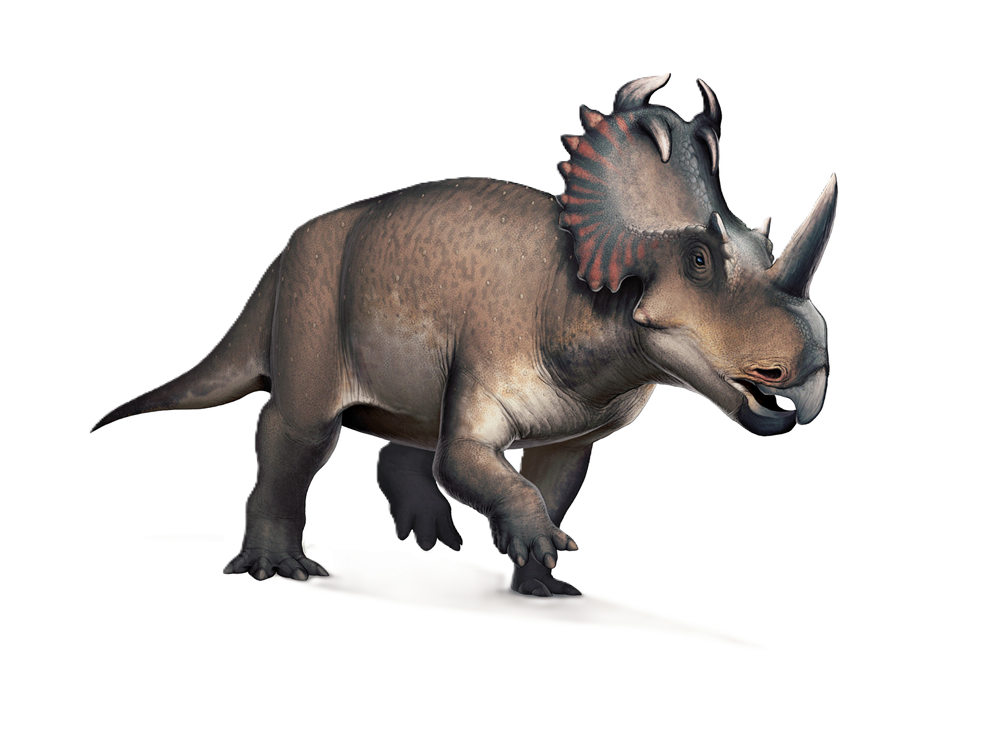
Centrosaurus lived in Alberta (Canada).
Centrosaurus was found in present-day Alberta, Canada, specifically in the area which forms part of the Dinosaur Park Formation. Centrosaurus apertus was named by Lawrence Lambe, a palaeontologist, based on specimens found around the Red Deer River in 1904. Bone beds which hold the fossilized bones of several individuals suggest that these dinosaurs could have lived together in herds.
Taxonomy
Select a rank to explore where Centrosaurus fits in the classification.