Beipiaosaurus inexpectus
Discover Beipiaosaurus, an Early Cretaceous dinosaur from China known for its primitive feathers, long claws, plant-eating adaptations, and role in the evolution of feathers
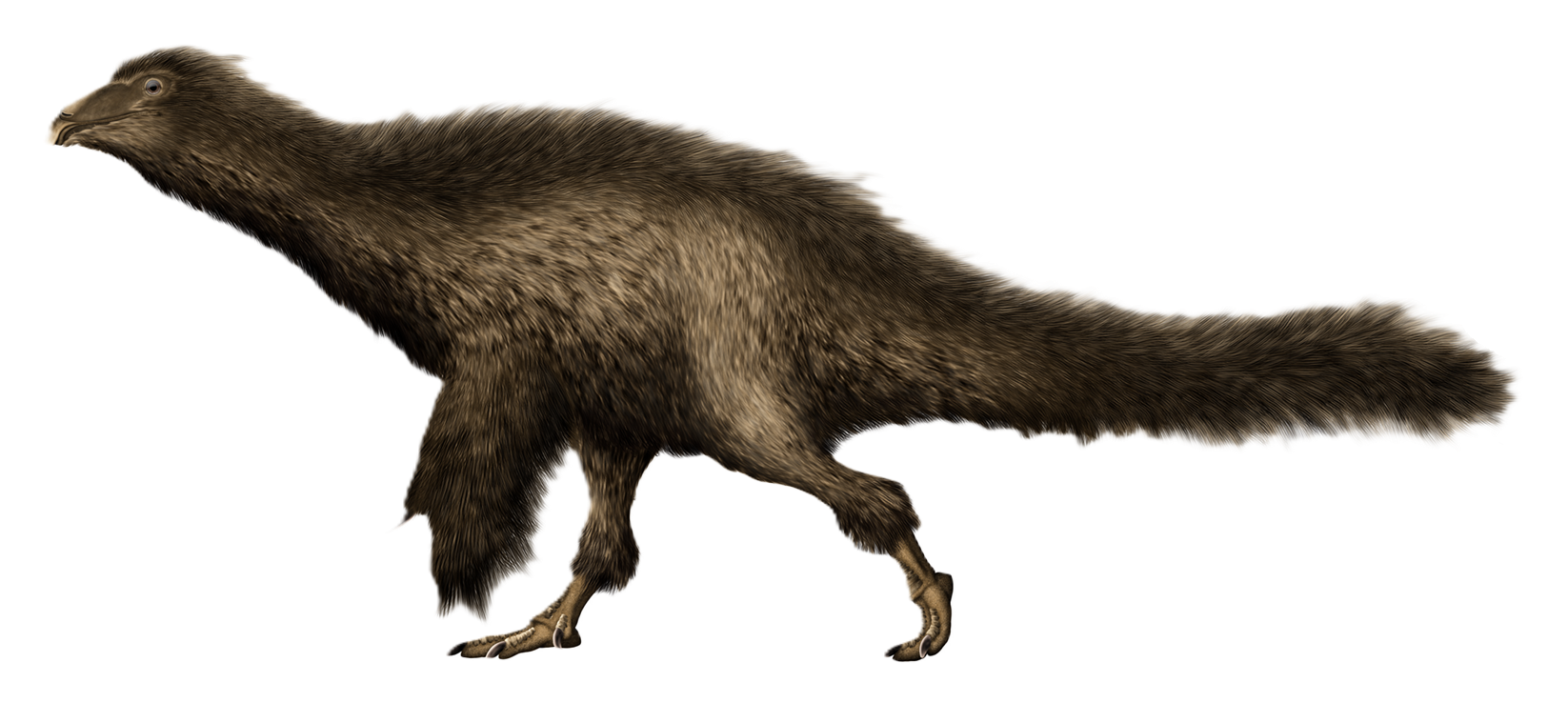
Beipiaosaurus was an unusual feathered dinosaur that lived during the Early Cretaceous period, approximately 127–121 million years ago. Its name means “Beipiao lizard,” referring to the city of Beipiao in northeastern China, near where its fossils were discovered. Scientifically known as Beipiaosaurus inexpectus, it belonged to the theropod group of dinosaurs called therizinosaurs. Unlike many theropods that primarily hunted other animals, this dinosaur had features associated with plant-eating, including a bulky body, a long neck, and powerful forelimbs with large claws. It measured approximately two meters in length, although its exact size remains uncertain. One of its most remarkable features was its primitive feather covering. Unlike the complex feathers of modern birds, some of its feathers were simple, elongated filaments that could not have supported flight.
Beipiaosaurus was discovered in 1996 near Beipiao, in north-eastern China, and was scientifically named and described in 1999. Its fossils came from the Yixian Formation, a famous geological deposit known for preserving Early Cretaceous animals in exceptional detail. The initial discoveries included partial skeletal remains and impressions of feather-like structures, providing important evidence of its unusual appearance. Additional fossil studies revealed more about its anatomy and feather covering. In 2009, researchers described distinctive elongated feathers associated with Beipiaosaurus that consisted of a single broad filament rather than several branching strands. These unusual structures expanded scientific understanding of feather diversity among non-avian dinosaurs. Although the known remains do not reveal every detail of its appearance, they provide valuable clues about its physical characteristics and evolutionary history.
Beipiaosaurus inhabited an environment that included lakes, forests, and abundant vegetation. Fossils from the Yixian Formation reveal a diverse ecosystem containing fish, insects, mammals, birds, and numerous dinosaurs. Its body structure suggests that Beipiaosaurus probably ate plants, although an omnivorous diet has also been proposed, and its exact food preferences remain uncertain. Unlike the sharp teeth and jaws associated with many meat-eating theropods, it possessed features more consistent with a different feeding strategy. Its long forelimb claws were characteristic of therizinosaurs and may have helped it gather vegetation or perform other tasks, although their precise function is unknown. Its feathers may also have served different purposes. Shorter, hairlike filaments could have provided insulation, while longer feathers might have played a role in visual display. However, these explanations remain hypotheses because fossils cannot establish their exact functions.
The fossils of Beipiaosaurus are important for understanding how feathers evolved before birds developed powered flight. Their unusual structures demonstrate that dinosaur feathers occurred in forms unlike the flight feathers of modern birds, supporting the idea that feathers initially served functions such as insulation or display before becoming adapted for flight in certain evolutionary lineages. The dinosaur also helped scientists better understand therizinosaurs, an unusual group whose evolutionary relationships were once difficult to determine. Although therizinosaurs belonged to the theropods, many developed characteristics associated with plant-eating rather than the typical predatory features of other members of this group. Today, Beipiaosaurus remains an important example of the diversity of feathered dinosaurs. Its preserved remains continue to provide insights into dinosaur anatomy, the early evolution of feathers, and the evolutionary relationships between non-avian dinosaurs and birds.
Beipiaosaurus lived in Beipiao (China).
Beipiaosaurus lived in what is now Liaoning Province in north-eastern China, where the climate was generally warm and seasonal during the Early Cretaceous. The region featured freshwater environments and volcanic landscapes that helped preserve many ancient organisms. Its surroundings supported a variety of small animals and plant life, offering opportunities for feeding and shelter. Volcanic ash and fine sediments helped preserve fossils that scientists study today to understand this prehistoric world.
Taxonomy
Select a rank to explore where Beipiaosaurus fits in the classification.