Barapasaurus tagorei
Discover Barapasaurus tagorei, a giant plant-eating dinosaur from Early Jurassic India, its impressive size, unique skeletal features, fossil discoveries, and importance in sauropod evolution
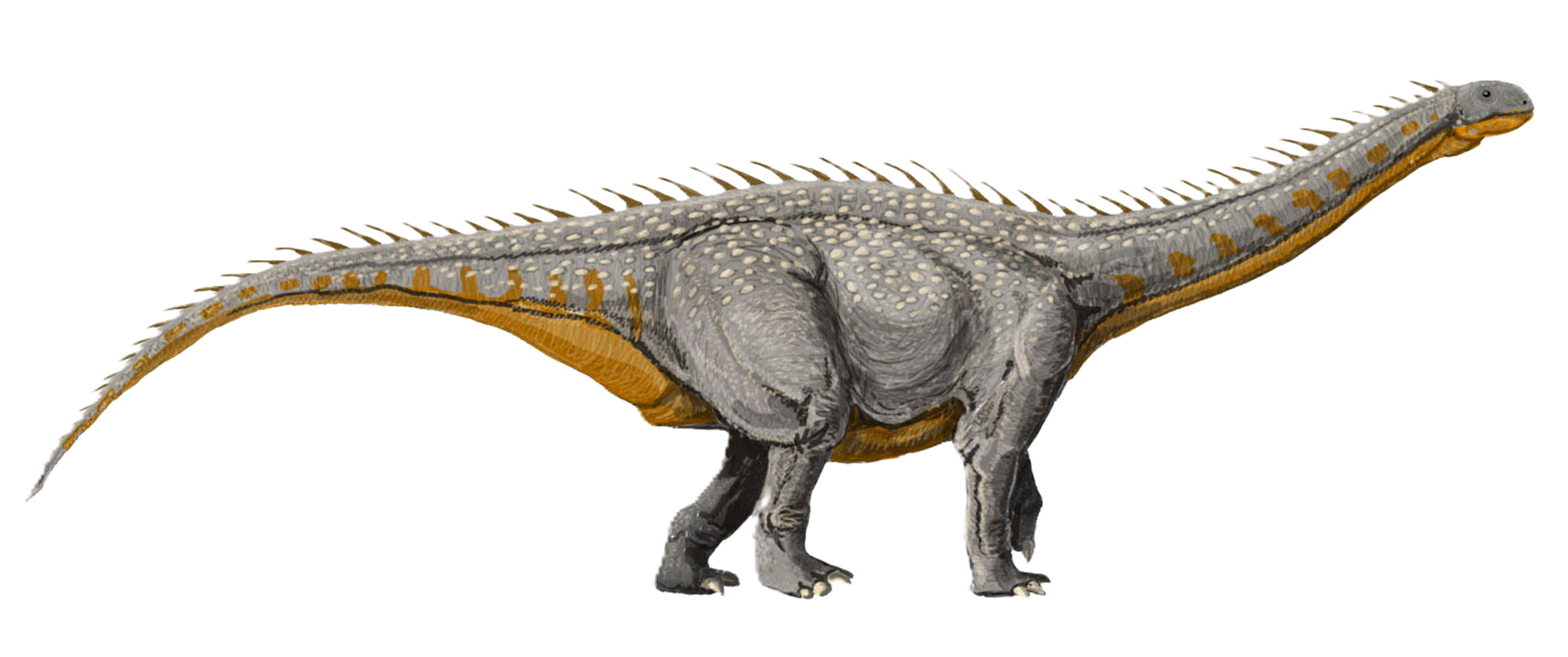
Barapasaurus was a large herbivorous dinosaur that lived during the Early Jurassic Period, approximately 185 to 170 million years ago. Its name means “big-legged lizard,” referring to its sturdy limbs and substantial body. Scientifically known as Barapasaurus tagorei, it was named in honour of Rabindranath Tagore, the celebrated Bengali poet and writer. Barapasaurus belonged to the sauropod group, a lineage of dinosaurs recognised by their long necks, extended tails, small heads, and massive bodies supported by strong legs. It is estimated to have reached around 14 metres in length and weighed approximately 7 tonnes. Although smaller than some of the enormous sauropods that appeared later, Barapasaurus was an impressive terrestrial animal for its time and provides valuable evidence of how early members of this group developed their characteristic body proportions.
The fossils of Barapasaurus were discovered in India during the early 1960s, with remains representing more than six individuals of different ages. The species was formally described in 1975, following the examination of its fossil material. These discoveries included numerous skeletal elements, such as vertebrae, limb bones, pelvic bones, and teeth, giving researchers an unusually detailed picture of an early sauropod. However, a complete skull has not been found, leaving some aspects of its head and feeding anatomy uncertain. The abundance of skeletal remains has enabled scientists to investigate how Barapasaurus supported its considerable weight, moved on land, and developed features later seen in more advanced sauropods. Its discovery also established India as an important location for studying the early diversification of these long-necked dinosaurs and their evolutionary history.
Barapasaurus probably inhabited environments containing rivers, floodplains, and abundant vegetation, where plant material provided the resources needed to sustain its large body. As a herbivore, it likely used its elongated neck to reach vegetation at different heights without constantly moving its entire body. Its spoon-shaped teeth were suited to gathering and cutting plant material rather than thoroughly grinding it, suggesting that much of the food processing occurred after swallowing. Like other sauropods, it probably relied on a digestive system capable of breaking down large quantities of vegetation. Its strong, column-like legs supported its heavy frame, while its long tail helped balance its body. Barapasaurus lived in an ecosystem that included other dinosaurs, potentially including Kotasaurus, another early sauropod known from India. Some of its fossil remains were also associated with fossilised tree trunks, providing additional evidence of the ancient environment in which these animals lived.
Barapasaurus is particularly important for understanding the early evolution of sauropods because its skeleton combines a large body and elongated neck with features considered relatively primitive compared with those of later members of the group. Researchers have examined its vertebrae to understand how the backbone supported its weight while allowing sufficient flexibility for movement. These bones also provide clues about the structural changes that helped later sauropods develop skeletons capable of supporting even greater body sizes. Barapasaurus demonstrates that substantial body size had already evolved among sauropods during the Early Jurassic, long before some of the largest dinosaurs appeared. Its Indian fossils contribute to research into how these animals diversified across the ancient southern continents. Although important questions remain about its behaviour, precise diet, and some anatomical details, Barapasaurus continues to offer valuable insights into the origins, body structure, and evolutionary development of the long-necked giants that later dominated many prehistoric landscapes.
Barapasaurus lived in Pranhita-Godavari Basin (India).
Barapasaurus lived in what is now India, when the region formed part of the ancient southern supercontinent Gondwana. Its surroundings supported a variety of early Jurassic plants, including ferns and other primitive vegetation that provided food for large herbivores. The landscape was shaped by seasonal water flows and low-lying terrain, creating suitable conditions for plant-eating dinosaurs. Its fossils offer a glimpse into the prehistoric ecosystems of ancient India.
Taxonomy
Select a rank to explore where Barapasaurus fits in the classification.