Australotitan cooperensis
Discover Australotitan’s size, fossils, diet, habitat, discovery near Eromanga, Queensland, and its place in Australia’s Cretaceous dinosaur history
Australotitan was a giant plant-eating sauropod dinosaur that lived in what is now Queensland, Australia, during the Cretaceous Period, approximately 96 to 92 million years ago. Its name means “southern titan,” reflecting Australia’s position in the Southern Hemisphere and the animal’s enormous size. Its full scientific name, Australotitan cooperensis, also refers to Cooper Creek, the watercourse near where its fossil remains were discovered. This dinosaur belonged to a group of long-necked, long-tailed herbivores characterised by small heads, massive bodies and four powerful limbs. Based on its fossilised bones, Australotitan is estimated to have measured around 25 to 30 metres in length and stood approximately 5 to 6.5 metres tall at the hip. Its exact body weight remains uncertain because the skeleton is incomplete, although researchers have proposed a broad range of possible estimates.
The fossils of Australotitan were discovered near Eromanga in southwestern Queensland, on property owned by the Mackenzie family. The animal was initially nicknamed “Cooper” after the nearby Cooper Creek system. Following the discovery in 2007, excavations and scientific investigations involved the Mackenzie family, the Eromanga Natural History Museum and Queensland Museum. The bones were exceptionally large and fragile, making their excavation, preparation and transportation challenging. Researchers recovered parts of the limbs, pelvis and shoulder region, which provided valuable evidence of the dinosaur’s anatomy and proportions. After years of preparation and examination, the species was formally described and named in a scientific study published in 2021. Its recognition established Australotitan as one of the most significant giant dinosaur discoveries in Australia and highlighted the importance of collaborative research between museums, scientists and local fossil collectors.
A particularly interesting aspect of Australotitan research was the use of digital technology to investigate its enormous bones. Scientists created three-dimensional scans of the fossil material, allowing them to examine anatomical details and compare the specimens with those of other sauropods. Digital models also made it easier to study bones held in different museum collections without repeatedly handling the original fossils. This approach helped researchers identify similarities and differences between Australotitan and related dinosaurs, including Diamantinasaurus, Savannasaurus and Wintonotitan. Such comparisons are essential because many Australian sauropod skeletons are incomplete, making it difficult to distinguish closely related species. In a 2024 study, researchers questioned whether Australotitan represents a separate species, suggesting that it may be synonymous with Diamantinasaurus matildae. Its classification therefore remains an important subject of scientific discussion.
During the Cretaceous Period, the region inhabited by Australotitan contained environments unlike the dry landscapes associated with parts of inland Queensland today. River systems and floodplains supported vegetation that provided food for large herbivorous dinosaurs. Like other sauropods, Australotitan probably used its long neck to reach plants at different heights, while its small head and relatively simple teeth were suited to gathering vegetation rather than extensive chewing. Much of the plant material was likely swallowed with limited processing in the mouth and broken down through digestion. Sustaining such a large body would have required substantial quantities of food over time. However, the exact plants consumed by Australotitan have not been established, and its feeding preferences remain uncertain. The available fossils also provide limited evidence about its social behaviour, daily movements or whether it lived in groups.
Australotitan shared ancient Australia with several other sauropods, including Diamantinasaurus, Savannasaurus and Wintonotitan, as well as meat-eating dinosaurs such as Australovenator. These animals formed part of a diverse Cretaceous ecosystem in which different dinosaur species occupied a range of ecological roles. Fossilised bones and other evidence help palaeontologists investigate the environments in which these animals lived, although their precise interactions cannot always be reconstructed. The presence of several sauropod forms in Queensland also offers clues about the evolutionary history and diversity of long-necked dinosaurs in Australia. Comparisons with sauropods from other southern continents help scientists investigate their relationships and distribution during a time when the landmasses of the ancient world had different geographical connections.
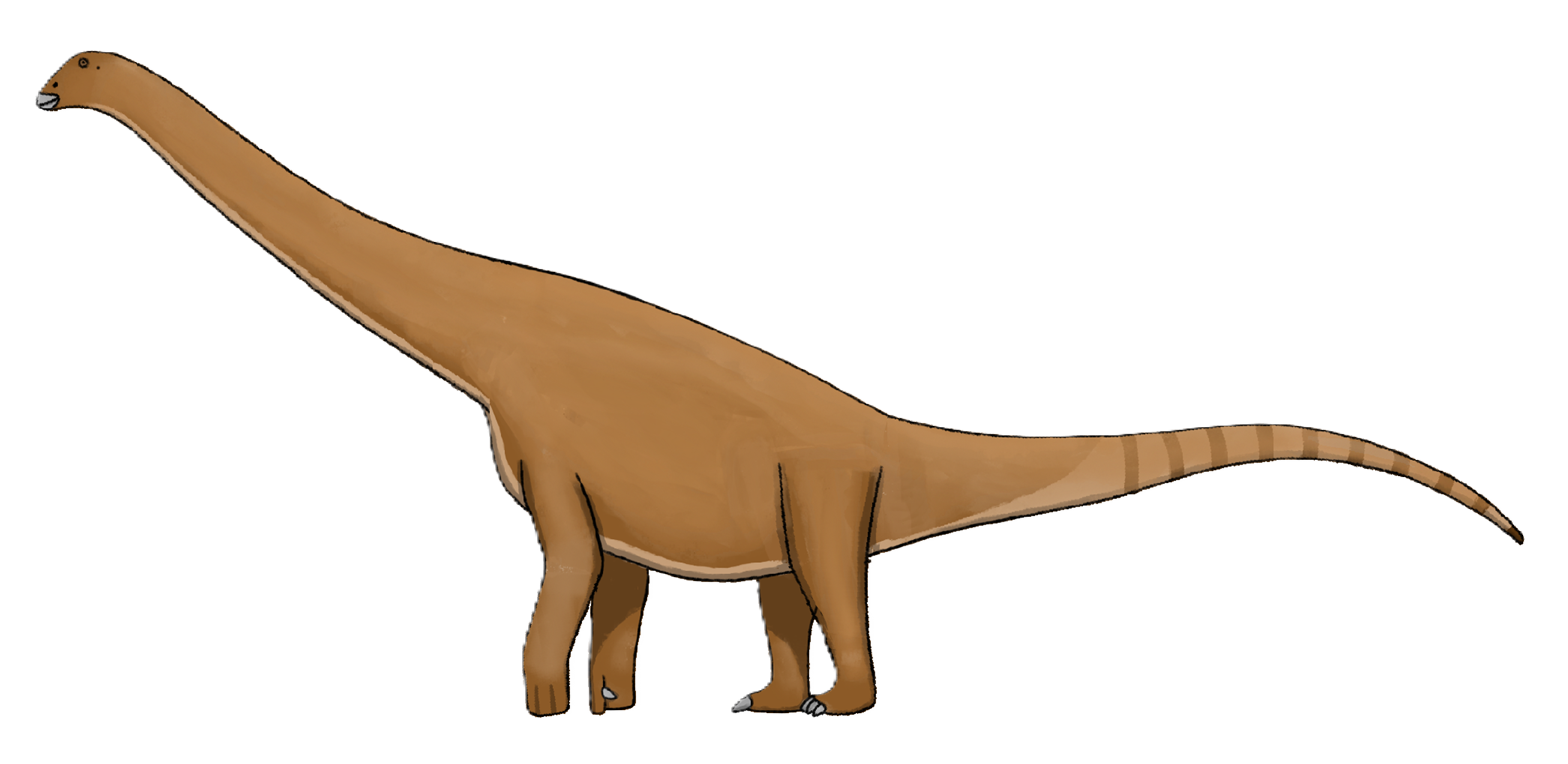
Australotitan lived in Queensland (Australia).
Australotitan lived in the region now known as southwestern Queensland, where ancient waterways shaped the surrounding landscape. The area’s river channels and low-lying plains supported plant life that sustained large herbivorous dinosaurs. Its remains reveal that inland Australia once supported a rich variety of prehistoric animals in environments very different from those seen there today.
Taxonomy
Select a rank to explore where Australotitan fits in the classification.