Argentinosaurus huinculensis
Discover Argentinosaurus size, estimated weight, diet, habitat, fossil discoveries, and how this giant plant-eating dinosaur lived in prehistoric South America
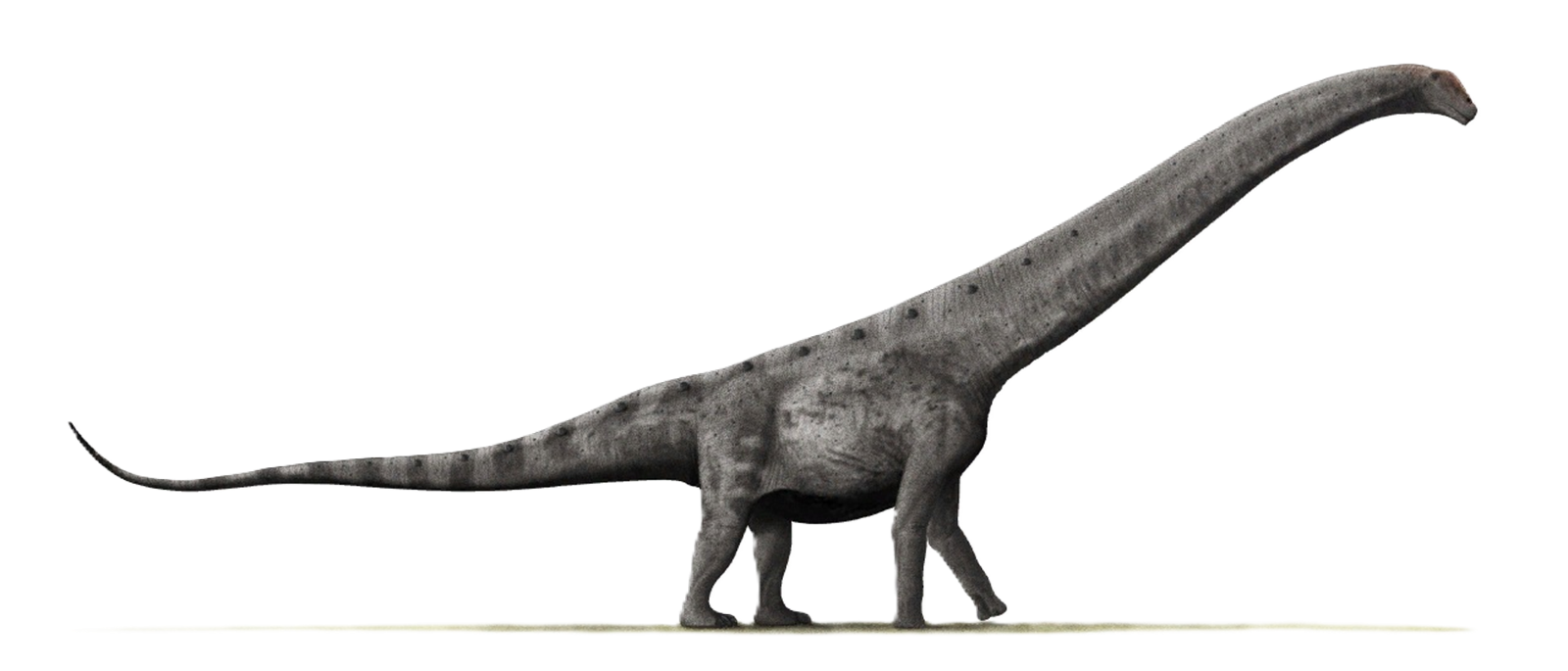
Argentinosaurus was an enormous plant-eating dinosaur that lived in South America during the Late Cretaceous Period, approximately 97 to 93.5 million years ago. Its name means “Argentine lizard,” reflecting the country where its fossils were discovered. It belonged to the sauropod group, characterized by long necks, extended tails, massive bodies, and strong, pillar-like legs. Argentinosaurus is widely regarded as one of the largest land animals to have ever existed. However, its exact dimensions remain uncertain because only a small number of fossilized bones have been recovered. Some estimates suggest that it reached approximately 30 to 35 meters in length. Supporting such an enormous body would have required a powerful skeletal structure and exceptionally strong limbs. Its estimated size makes Argentinosaurus an important subject of research into the limits of body size among terrestrial animals.
The known fossils of Argentinosaurus were discovered in Neuquén Province, in Patagonia, Argentina, a region famous for its rich deposits of prehistoric animals. In 1987, a local farmer reportedly discovered large fossil bones on his land, prompting paleontologists to investigate the site. Their findings revealed the remains of a previously unknown giant sauropod. Scientists José Bonaparte and Rodolfo Coria formally described and named Argentinosaurus in 1993. Unfortunately, the fossil record remains incomplete, consisting mainly of vertebrae, parts of the pelvis, and leg bones rather than a complete skeleton. This scarcity makes it difficult to establish its precise body proportions, weight, and movement. Researchers therefore compare the available remains with those of other giant sauropods to reconstruct its likely appearance and understand how its enormous body functioned.
Argentinosaurus inhabited an environment that included rivers, floodplains, and areas rich in vegetation. These landscapes provided the plant resources necessary to sustain such a large herbivore. Its long neck probably allowed it to reach foliage at different heights, while its relatively small head and peg-shaped teeth were adapted for stripping vegetation rather than thoroughly chewing it. Like other sauropods, Argentinosaurus likely swallowed plant material with little chewing and relied on its digestive system to break it down. Its long neck may also have helped it collect food across a broad area without repeatedly moving its massive body. Although its enormous size may have discouraged some predators from attacking fully grown individuals, younger animals were probably more vulnerable. Large carnivorous dinosaurs, including Mapusaurus, lived in the same region and may have posed a threat to juveniles or weakened individuals, although direct evidence of their interactions with Argentinosaurus remains limited.
Argentinosaurus continues to attract scientific interest because its extraordinary size raises important questions about dinosaur anatomy, feeding requirements, and growth. Paleontologists examine its fossilized bones and compare them with those of related sauropods to investigate how such a massive animal supported its weight, obtained enough food, and developed throughout its life. Its size also provides valuable insight into the biological adaptations that allowed some dinosaurs to become far larger than most modern land animals. Although Argentinosaurus is frequently described as the largest dinosaur ever discovered, its exact ranking cannot be established with certainty. Other giant sauropods, including Patagotitan, have also produced impressive size estimates, and incomplete fossils make direct comparisons difficult. Despite these uncertainties, Argentinosaurus remains one of the most remarkable examples of gigantism in the history of terrestrial life.
Argentinosaurus lived in Neuquén Province (Argentina).
Argentinosaurus lived in what is now Patagonia in southern Argentina, South America, during the Late Cretaceous Period. Its habitat included river valleys, broad floodplains, and vegetated landscapes that provided abundant plant food. The region’s warm environment and seasonal changes supported a variety of prehistoric animals, including other giant dinosaurs. Fossils discovered in Neuquén Province provide important evidence of the environment in which this enormous herbivore lived.
Taxonomy
Select a rank to explore where Argentinosaurus fits in the classification.