Archaeopteryx lithographica
Explore Archaeopteryx facts, including its size, feathers, diet, habitat, fossils, flight abilities, and its fascinating connection to the evolution of modern birds
Archaeopteryx was a feathered, bird-like animal that lived approximately 150 million years ago during the Late Jurassic Period. Its name means “ancient wing,” and its fossils have played a major role in understanding the evolutionary origins of birds. Archaeopteryx is often described as a transitional fossil because it possessed a combination of features associated with non-avian dinosaurs and early birds. It was relatively small, measuring around 50 centimeters in body length in some estimates, although its overall size varied among specimens and depended on how measurements were taken. Its body was covered in feathers, with well-developed flight feathers on its wings and tail. Unlike most modern birds, however, Archaeopteryx had a long, bony tail, jaws lined with teeth, and three clawed fingers on each wing. Its skeleton also displayed several characteristics of small theropod dinosaurs, making it particularly important for research into how birds evolved from their dinosaur ancestors.
Archaeopteryx lived in what is now southern Germany, particularly around the Solnhofen region of Bavaria. During the Late Jurassic, this area contained a complex landscape of shallow tropical seas, lagoons, and scattered islands. The surrounding environments supported a variety of plants and animals, while the calm, fine-grained sediments of the lagoons eventually formed limestone that preserved fossils with remarkable detail. Archaeopteryx remains have been discovered in these deposits alongside fossils of fish, marine reptiles, insects, and other ancient organisms. The first known feather fossil attributed to Archaeopteryx was discovered in 1860, and the first widely recognized skeletal specimen followed in 1861. These discoveries attracted considerable scientific attention because they combined clear evidence of feathers with anatomical features characteristic of dinosaurs. Some specimens preserved detailed feather impressions, allowing researchers to examine their arrangement and structure. Archaeopteryx was a feathered theropod dinosaur, rather than an animal entirely separate from dinosaurs, and it represents an important stage in the broader evolutionary history of birds.
Scientists believe Archaeopteryx probably ate small animals, although its exact diet remains uncertain. Its sharp, pointed teeth suggest that it could have captured insects and other small prey, potentially including small vertebrates. The claws on its fingers may have helped it grasp objects or move around its environment, although their precise functions are still debated. Its wing and tail feathers played important roles in controlling movement, and their structure has provided valuable evidence for investigating its ability to fly. The arrangement of its flight feathers resembled that of birds, but its skeleton differed from that of most living flying species. Archaeopteryx lacked the large, keeled breastbone found in many modern birds, where powerful flight muscles attach. This difference has led researchers to investigate whether it achieved active flight, relied partly on gliding, or used a combination of aerial movements. Its long, feathered tail may also have helped with stability and steering, although its exact contribution to movement remains under investigation.
Archaeopteryx continues to be one of the most significant fossils in the study of bird evolution because it provides direct evidence of the combination of dinosaurian and bird-like characteristics. Its discovery helped strengthen the scientific understanding that birds evolved from theropod dinosaurs. Later discoveries of feathered dinosaurs, particularly in China, demonstrated that feathers were present in several dinosaur groups before modern birds appeared. These findings also revealed that feathers initially served functions beyond powered flight, potentially including insulation, display, and other forms of communication. The evolution of birds involved numerous anatomical changes, including modifications to the forelimbs, feathers, skeleton, and overall body proportions. Although Archaeopteryx is not generally considered the direct ancestor of modern birds, it represents a close evolutionary relative that helps scientists investigate this complex transition. Modern imaging techniques, detailed fossil analysis, and comparisons with other early birds and feathered dinosaurs continue to reveal new information about its anatomy, lifestyle, and place in evolutionary history.
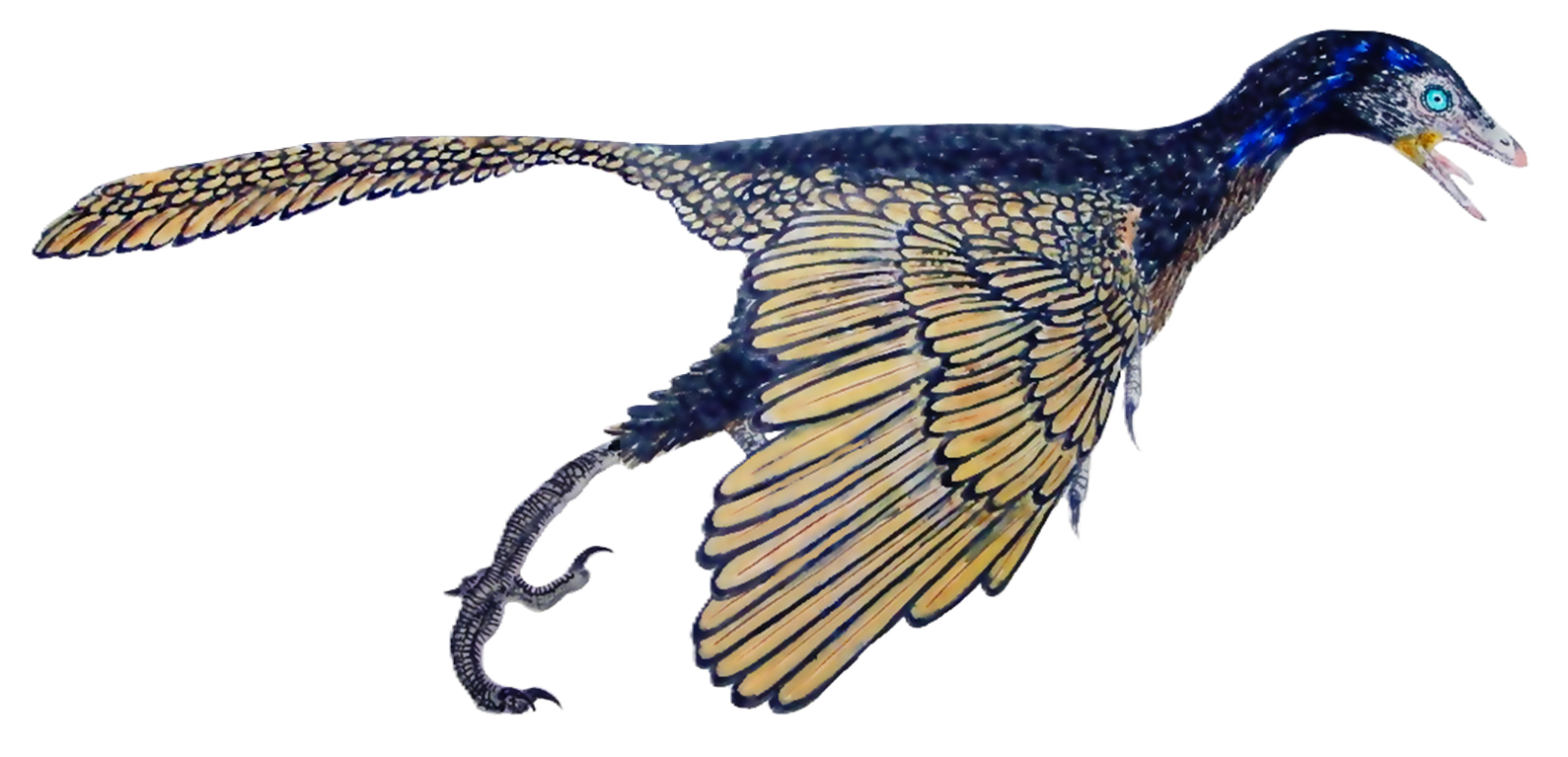
Archaeopteryx lived in Solnhofen (Germany).
Archaeopteryx lived among warm, island-studded landscapes in a region of Europe that was very different from today. It likely moved through coastal habitats where land and shallow marine environments met. These surroundings offered access to small animals and insects that may have formed part of its diet. The fine limestone deposits of the region preserved its delicate bones and feathers for millions of years.
Taxonomy
Select a rank to explore where Archaeopteryx fits in the classification.