Apatosaurus ajax
Discover how big Apatosaurus was, what it ate, where it lived, its physical features, fossil discoveries, and the fascinating history behind its name
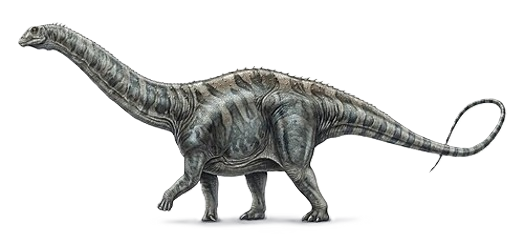
Apatosaurus was a large, plant-eating sauropod dinosaur that lived approximately 152 to 145 million years ago during the Late Jurassic Period. Its name means “deceptive lizard,” referring to similarities between some of its bones and those of other prehistoric animals. As a member of the diplodocid family, Apatosaurus had a massive body, a long neck, an extended tail, and a relatively small head. It could reach around 20 to 23 meters in length, depending on the individual. Its four strong, pillar-like legs supported its enormous weight, while its long neck helped it reach vegetation. Apatosaurus had small, peg-shaped teeth suited to stripping leaves and other plant material rather than chewing food thoroughly. It swallowed much of its food with limited chewing and relied on its digestive system to process large quantities of vegetation.
Fossils of Apatosaurus have been discovered in the western United States, particularly in Colorado, Wyoming, and other areas containing rocks from the Morrison Formation. This geological formation preserves a rich record of Late Jurassic life. During that period, the region featured rivers, floodplains, woodlands, and areas affected by seasonal drought. These environments supported diverse plant communities and provided food and shelter for numerous animals. Apatosaurus shared its habitat with other dinosaurs, including Diplodocus, Brachiosaurus, Stegosaurus, and the meat-eating Allosaurus. The abundance of vegetation helped sustain large herbivores, while predators hunted other animals within the same ecosystem. Although adult Apatosaurus was enormous, younger individuals may have faced greater risks from predators, including Allosaurus. However, the precise nature of these interactions remains uncertain because direct evidence is limited.
American paleontologist Othniel Charles Marsh first described Apatosaurus in 1877. Subsequent discoveries and studies have helped scientists understand its skeletal structure, estimated size, and evolutionary relationships with other sauropods. Its scientific history is closely connected to the debate over Brontosaurus. Marsh named Apatosaurus first and later described Brontosaurus, but scientists subsequently considered the two names to refer to the same genus for much of the twentieth century. Further research renewed the debate, and some paleontologists now recognize Brontosaurus as a distinct genus, although this classification is not universally accepted. The changing interpretation of these fossils demonstrates how new evidence can reshape scientific understanding of prehistoric animals.
Apatosaurus fed on a variety of plants, including ferns and other leafy vegetation available in its environment. Its long neck provided access to plants at different heights, although the precise range of its feeding movements and the flexibility of its neck remain subjects of scientific investigation. Its large body required substantial amounts of food to support growth and maintain its energy needs. The combination of a long neck, powerful limbs, and an extended tail made Apatosaurus well adapted to life as a giant terrestrial herbivore. Its tail may have helped with balance and movement, although its exact functions are still investigated by researchers.
The study of Apatosaurus fossils has contributed significantly to paleontology by revealing how sauropods supported their immense bodies while developing unusually long necks and tails. Comparisons with related dinosaurs, particularly Diplodocus, help scientists investigate differences in anatomy, feeding strategies, and evolutionary development. Fossil preparation and modern analytical techniques have also improved the accuracy of skeletal reconstructions, correcting earlier interpretations based on incomplete or poorly understood remains.
Apatosaurus lived in Montana (USA), Wyoming (USA), Colorado (USA).
Apatosaurus lived in the western part of North America during the Late Jurassic Period, in landscapes that changed with the seasons. It likely moved through open woodlands and areas near rivers, where fresh water and abundant vegetation were available. The surrounding environment supported a wide variety of plant-eating dinosaurs and predators. These habitats provided the resources Apatosaurus needed to survive and grow to its enormous size.
Taxonomy
Select a rank to explore where Apatosaurus fits in the classification.