Antarctopelta oliveroi
Discover how Antarctopelta lived in prehistoric Antarctica, what it looked like, what it ate, and how its fossils revealed the surprising world of dinosaurs in the polar south
Antarctopelta was an armoured, plant-eating dinosaur that lived in Antarctica during the Late Cretaceous period, approximately 74–70 million years ago. Its name means “Antarctic shield,” referring to the continent where its fossils were discovered and the protective bony armour covering its body. It belonged to the ankylosaurs, a group of herbivorous dinosaurs known for their sturdy bodies, short legs and bony plates, called osteoderms, embedded in their skin. Antarctopelta was among the first dinosaurs discovered in Antarctica, making it an important find for understanding the continent’s prehistoric wildlife. Unlike modern Antarctica, which is covered by extensive ice sheets, the continent had a much milder climate during the dinosaur’s lifetime, with forests and other vegetation growing in some areas. These plants provided food for herbivorous dinosaurs, showing that dinosaurs could survive in polar environments despite the extreme seasonal variations in daylight.
The fossils of Antarctopelta were discovered on James Ross Island, near the Antarctic Peninsula, in 1986 by Argentine geologist Eduardo Olivero and his team. However, the remains were not formally described and named until 2006, when palaeontologists Leonardo Salgado and Zulma Gasparini published their scientific study. The discovery was particularly significant because dinosaur fossils are relatively rare in Antarctica. The recovered material included fragments of the skull, teeth, vertebrae, limb bones and bony armour. Although the remains were incomplete and scattered, they provided valuable evidence about the dinosaur’s anatomy and evolutionary relationships. These fossils date to the Late Cretaceous, when Antarctica formed part of Gondwana, an ancient supercontinent that also included South America, Africa, Australia and other southern landmasses. At that time, Antarctica lacked its present-day ice sheets and supported vegetation in several regions. Although its climate was cooler than that of many tropical environments, it could sustain a variety of prehistoric animals.
Antarctopelta was a relatively small to medium-sized ankylosaur, estimated to have reached around four metres in length, although its exact size remains uncertain because of the incomplete fossil record. It likely had a broad, low-slung body, four sturdy legs and protective bony plates embedded in its skin. Its teeth and skull fragments indicate that it was herbivorous, feeding on the vegetation available in its habitat. Ferns, leaves and other plants may have formed part of its diet, although its precise food preferences are unknown. Its strong limbs would have helped support its body and allowed it to move across the landscape in search of food. One of the most interesting aspects of its existence was the polar environment it inhabited, where seasonal changes brought long periods of daylight in summer and extended darkness in winter. Its presence in Antarctica provides valuable evidence of how dinosaurs adapted to environments that differed considerably from those of lower latitudes.
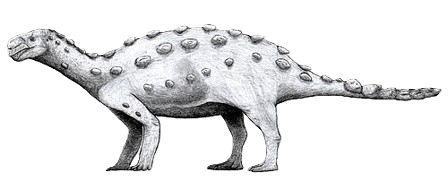
Antarctopelta lived in James Ross Island (Antarctica).
Antarctopelta roamed an area which today lies within Antarctica. Its remains have been found in the James Ross Island area adjacent to the Antarctic Peninsula. Antarctica had a relatively warm climate and vegetation approximately 74-70 million years ago when the dinosaur was alive.
Taxonomy
Select a rank to explore where Antarctopelta fits in the classification.