Ajnabia odysseus
Discover Ajnabia, a small duck-billed dinosaur from Late Cretaceous Morocco, and explore its estimated size, plant-based diet, fossil discovery, and surprising role in dinosaur migration
Ajnabia was a small, herbivorous dinosaur that lived approximately 66 million years ago during the Late Cretaceous Period, near the end of the Mesozoic Era. Its fossils were discovered in Morocco, North Africa. Ajnabia belonged to the hadrosaurid family, commonly known as duck-billed dinosaurs because of their broad, flattened snouts. The discovery of Ajnabia was particularly significant because hadrosaurid fossils were previously uncommon in Africa. Its discovery provided important evidence about dinosaur distribution, evolution, and migration during the Late Cretaceous. The name Ajnabia means “foreigner” in Arabic.
Ajnabia was relatively small compared with many other hadrosaurids. Although its exact body length is uncertain, it is generally estimated to have measured around three metres. This estimate must be treated cautiously because only limited fossil remains have been discovered. Like other hadrosaurids, Ajnabia may have been capable of walking on both two and four legs. Its broad snout likely helped it gather vegetation, while its specialised teeth would have enabled it to process plant material efficiently. Hadrosaurids possessed closely packed rows of teeth that formed grinding surfaces, allowing them to chew vegetation more effectively than many other herbivorous dinosaurs.
The complete appearance of Ajnabia cannot be reconstructed with certainty from the available fossils. However, comparisons with related hadrosaurids can help scientists infer some aspects of its anatomy. Its fossils were discovered in the Oulad Abdoun Basin in Morocco, a region known for its Late Cretaceous fossil deposits. Approximately 66 million years ago, the environment of this region differed considerably from the world today. Continental positions, coastlines, and sea levels were different, creating habitats that supported a variety of ancient plants and animals.
As a herbivore, Ajnabia would have fed on vegetation available in its environment. It probably shared its habitat with other prehistoric animals, although its precise behaviour, daily activities, and ecological relationships remain uncertain. The limited fossil evidence makes it difficult to determine exactly how it lived or interacted with other species.
One of the most remarkable aspects of Ajnabia is what it reveals about dinosaur migration during the Late Cretaceous. Its discovery in Morocco was significant because hadrosaurids were previously poorly represented in the African fossil record. As a member of Lambeosaurinae, Ajnabia was closely related to forms known from Europe, suggesting that its ancestors may have dispersed from Asia through Europe before reaching Africa. This raises questions about how these dinosaurs crossed the marine barriers separating the continents, potentially through island chains or stretches of open ocean. The discovery therefore highlights the complexity of prehistoric dispersal and challenges earlier assumptions about the geographical distribution of hadrosaurids.
Ajnabia lived near the end of the Cretaceous Period, shortly before the mass extinction approximately 66 million years ago that eliminated all non-avian dinosaurs. Although this small dinosaur is known from limited fossil remains, its discovery has contributed significantly to our understanding of prehistoric biodiversity and the movement of animals across continents. Further fossil discoveries will continue to improve our knowledge of Ajnabia and the evolutionary history of dinosaurs in Africa.
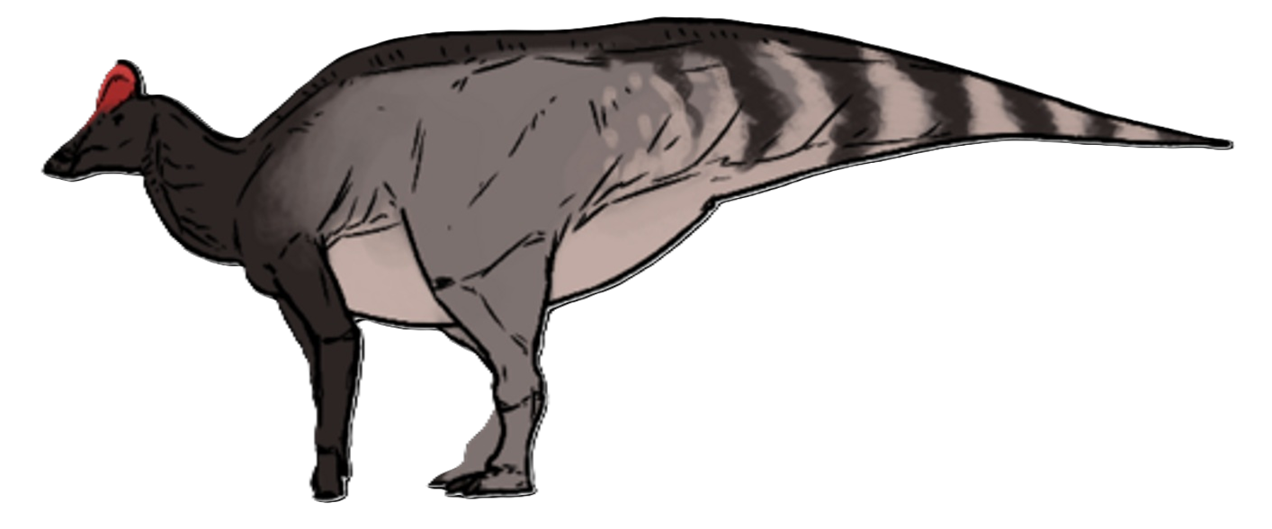
Ajnabia lived in Ouled Abdoun Basin (Morocco).
Ajnabia lived in what is now north-central Morocco, in a region that had a very different landscape during the Late Cretaceous. Its habitat likely included coastal environments and low-lying areas influenced by changing sea levels. The surrounding ecosystems supported diverse prehistoric plants and animals, providing food and shelter for herbivorous dinosaurs. The region’s ancient geography may also have played a role in the movement of dinosaur species between continents.
Taxonomy
Select a rank to explore where Ajnabia fits in the classification.