Ajancingenia yanshini
Discover Ajancingenia yanshini, a small oviraptorosaur dinosaur from the Late Cretaceous of Mongolia. Learn about its size, feathers, possible diet, physical features, and scientific history
Ajancingenia was a small, feathered dinosaur that lived during the Late Cretaceous period, approximately 84 to 72 million years ago. Its fossils were discovered in Mongolia, a country in East Asia known for its rich deposits of dinosaur remains. This region was once home to an extraordinary variety of prehistoric animals, from small, fast-moving dinosaurs to enormous meat-eating predators. Ajancingenia was one of the unusual dinosaurs that contributed to this remarkable diversity.
Ajancingenia belonged to a group of theropod dinosaurs called oviraptorosaurs. Although many people associate theropods with large predators such as Tyrannosaurus rex, this group included dinosaurs with a wide range of body sizes, diets, and lifestyles. Oviraptorosaurs were particularly distinctive because of their toothless beaks, feathered bodies, and unusual head and limb shapes. Some members of this group had tall crests on their heads, while others possessed elongated tails or specialized hands. These differences demonstrate how diverse oviraptorosaurs became during the Cretaceous period.
Ajancingenia is estimated to have measured approximately 1.5 to 2 meters in length and weighed around 20 to 30 kilograms. It had a relatively compact body, long legs, short arms, and three fingers on each hand. Its head ended in a short snout with a toothless beak, which may have helped it grasp or break apart food. Unlike animals with teeth that cut or grind their food, Ajancingenia would have relied on its beak and possibly other parts of its digestive system to process what it ate. However, the precise mechanics of its feeding remain uncertain.
One of the most interesting features of Ajancingenia is its association with the wider group of feathered theropods. Feathers or feather-like structures evolved in numerous non-flying dinosaurs and may have served several purposes, including insulation, display, and communication. These structures were not necessarily adaptations for flight. Although evidence from related oviraptorosaurs can help scientists reconstruct its likely appearance, the exact color and pattern of Ajancingenia's feathers remain unknown.
The scientific name commonly used for this dinosaur is Ajancingenia yanshini. Its naming history is somewhat complicated because it was originally classified under the name Ingenia. That name was later replaced following a naming conflict, leading to the use of Ajancingenia. The species name yanshini honors Russian paleontologist Alexander Yanshin. This history illustrates an important aspect of paleontology: identifying a fossil is only part of the process, as scientists must also determine its relationships to previously discovered species and ensure that its scientific name follows the rules of zoological nomenclature.
The exact diet of Ajancingenia remains uncertain. Scientists consider it possible that this dinosaur was an omnivore, meaning it consumed both plant and animal matter. Potential food sources may have included seeds, fruits, insects, and other small organisms, depending on what was available in its habitat. However, these possibilities have not been confirmed. A toothless beak provides some clues about feeding habits, but it cannot establish a complete diet on its own. Comparisons with related species and further study of its skull and jaws may help researchers narrow down the possibilities.
Its elongated hind limbs suggest that Ajancingenia was adapted for terrestrial movement, potentially helping it travel through its habitat while searching for food or avoiding danger. Its hands may have helped it handle food or perform other activities, although their precise functions remain uncertain. Reproduction is another interesting aspect of oviraptorosaur biology. Fossils of related species have provided evidence of nesting behavior, including individuals preserved in positions consistent with brooding eggs. Such discoveries offer valuable insights into the reproductive behavior of these dinosaurs, although comparable evidence is needed to establish whether Ajancingenia exhibited the same behaviors.
Ajancingenia is important because it helps scientists understand the diversity of small theropods that lived in prehistoric Asia. Its anatomy and relationship to other oviraptorosaurs contribute to a broader picture of dinosaur evolution, showing that theropods occupied a variety of ecological roles beyond those of large predators. Rather than being dominated entirely by gigantic herbivores and formidable meat-eaters, the Late Cretaceous world also supported smaller dinosaurs with distinctive anatomical features and potentially specialized lifestyles.
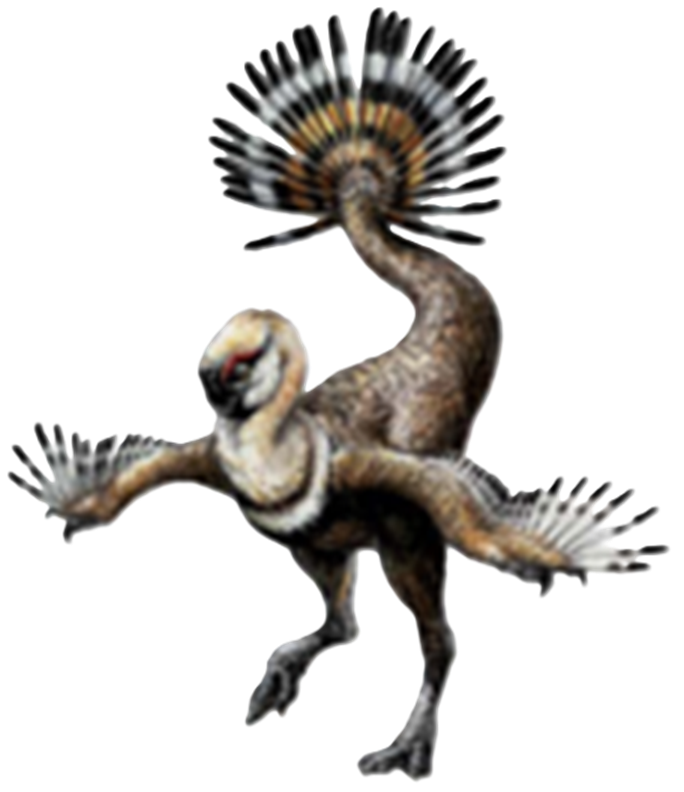
Ajancingenia lived in Hermiin Tsav (Mongolia).
Ajancingenia lived in what is now the arid landscapes of Mongolia, where ancient ecosystems supported a remarkable variety of dinosaurs and other prehistoric animals. During the Late Cretaceous, this region experienced seasonal environmental changes and contained habitats that differed from today's dry terrain. Its surroundings provided opportunities for small dinosaurs to find food and shelter among other animals.
Taxonomy
Select a rank to explore where Ajancingenia fits in the classification.