Acrocanthosaurus atokensis
Discover how Acrocanthosaurus lived, what it hunted, how large it grew, and what made this Early Cretaceous predator unique
Acrocanthosaurus was a massive meat-eating dinosaur that lived during the Early Cretaceous Period, approximately 116 to 110 million years ago. It was one of the largest land predators of its time and belonged to a group of dinosaurs known as theropods, which included many other meat-eating species. Its fossils have been discovered mainly in the southern United States, particularly in Oklahoma and Texas. These discoveries provide valuable evidence about the types of dinosaurs that lived in North America during the Early Cretaceous. Acrocanthosaurus was an impressive animal, measuring approximately 11 to 12 metres in length and weighing an estimated 4 to 6 tonnes. Its enormous size would have made it a dominant predator in the environments it inhabited.
One of the most interesting features of Acrocanthosaurus was the row of unusually tall bony spines extending from its vertebrae along its neck, back and tail. These spines gave the dinosaur a distinctive appearance and inspired its name, which means “high-spined lizard.” Unlike the tall, broad sail seen in some other dinosaurs, these spines were narrow extensions of the bones of its backbone. Scientists believe that the spines supported muscles and ligaments, helping to stabilise the body and support movement. Although their exact function is not fully understood, they make Acrocanthosaurus easily recognisable among large theropods. Its skull was large and powerful, with strong jaws and numerous sharp, serrated teeth adapted for gripping and tearing flesh. These features made it well equipped to feed on other animals.
Acrocanthosaurus lived in ancient environments that included floodplains, wooded areas and river systems. During the Early Cretaceous, parts of what are now Oklahoma and Texas experienced landscapes that supported a variety of plant-eating and meat-eating dinosaurs. The presence of rivers and floodplains provided water and helped sustain the vegetation needed by large herbivores. As a carnivore, Acrocanthosaurus probably hunted large herbivorous dinosaurs and may also have fed on animals that had already died. Its strong jaws and sharp teeth were useful for tearing meat, while its muscular hind limbs supported its heavy body during movement. Although it was a large predator, its precise hunting techniques remain uncertain because behaviour cannot usually be observed directly in fossils.
Another fascinating aspect of Acrocanthosaurus is the importance of its fossils in understanding the evolution of large predatory dinosaurs. Its anatomy helps palaeontologists investigate how enormous theropods developed powerful skulls, muscular bodies and specialised skeletal structures. By comparing its bones with those of other theropods, researchers can study relationships between different dinosaur groups and how large predators evolved over time.
Acrocanthosaurus is particularly important because its remains help scientists reconstruct food webs and understand the relationships between predators and herbivores in Early Cretaceous North America. However, many details about Acrocanthosaurus, including its exact hunting behaviour and the purpose of its tall spinal bones, remain subjects of scientific investigation.
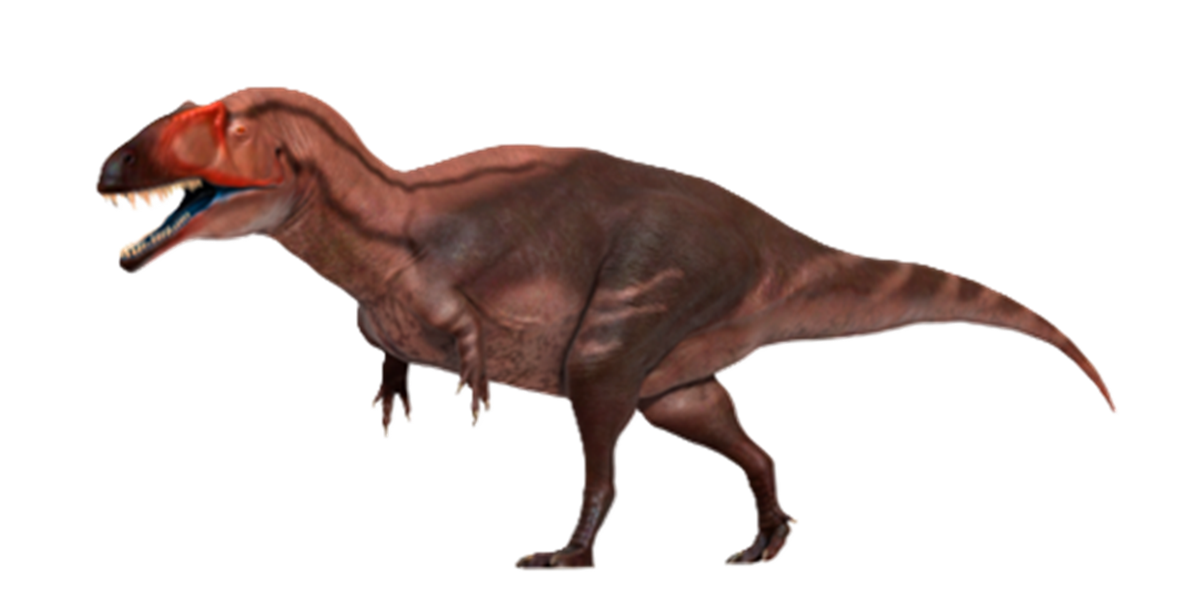
Acrocanthosaurus lived in Oklahoma (USA), Texas (USA).
Acrocanthosaurus lived in what is now North America, particularly in areas that are today Oklahoma and Texas in the United States, during the Early Cretaceous Period, around 116–110 million years ago. Its habitat included ancient floodplains, river systems, and wooded environments that supported a variety of dinosaurs and other animals.
Taxonomy
Select a rank to explore where Acrocanthosaurus fits in the classification.