Achelousaurus horneri
Discover How Achelousaurus Lived, What It Ate, and What Made This Dinosaur Unique
Achelousaurus was a herbivorous dinosaur that lived during the Late Cretaceous period, approximately 74–72 million years ago. Its fossils were first discovered in 1987 in Montana, USA, and the species was formally named in 1995. Achelousaurus belonged to the group of horned dinosaurs known as ceratopsians, which were characterized by their distinctive frills and facial horns or bony projections. This dinosaur was approximately 6 metres long and is estimated to have weighed around 3 tonnes. It lived during a time when dinosaurs were among the dominant animals on land, sharing its environment with a wide variety of plant-eating and meat-eating species. Although it was not as large as some of the biggest horned dinosaurs, Achelousaurus had a powerful body, a large skull, and distinctive facial features that made it stand out among its relatives.
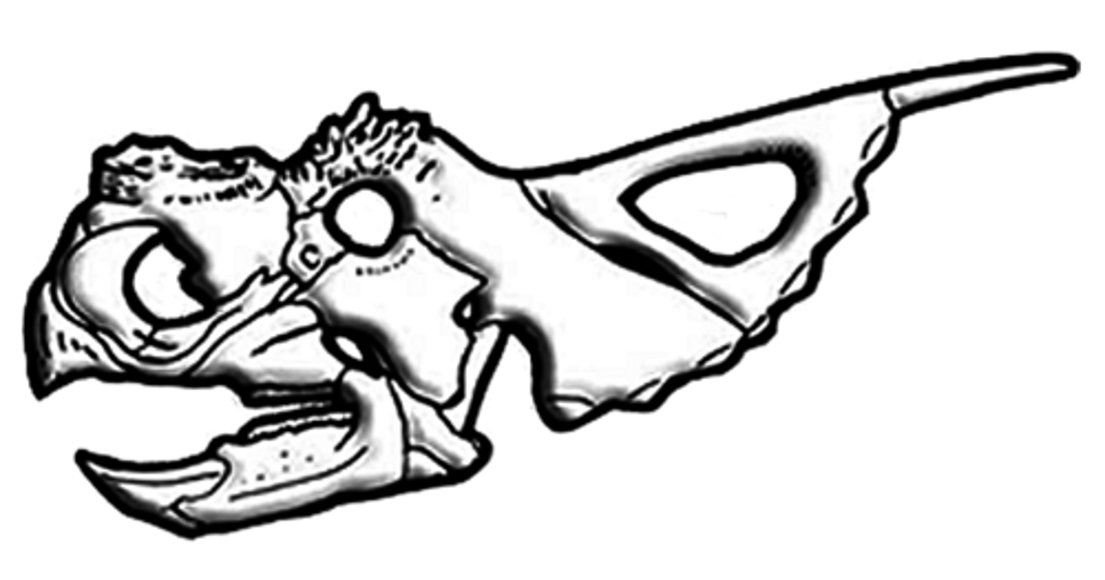
One of the most distinctive features of Achelousaurus was its large, bony frill behind the head. Unlike many other ceratopsians, adult Achelousaurus lacked prominent brow horns and instead had large, rough bony bumps above its eyes. It also possessed a similar bony bump on its nose. The frill featured a pair of long, outward-curving spikes at the back of the skull. These unusual structures gave the dinosaur a distinctive appearance and helped palaeontologists distinguish it from other horned dinosaurs. The frill was made of bone and extended backwards from the skull, forming a broad shield-like structure. Although the frill may have helped protect the neck, it could also have played a role in visual display and communication. Its unusual combination of facial bumps and long frill spikes is particularly interesting because it differed from the more familiar arrangement of large horns seen in dinosaurs such as Triceratops.
Achelousaurus lived in an environment characterized by river plains, floodplains, and forests, with a climate that experienced seasonal changes. These landscapes provided a variety of plants that supported large populations of herbivorous dinosaurs. Other dinosaurs that lived in the same region included Daspletosaurus, a tyrannosaurid theropod, and Maiasaura, a duck-billed herbivorous dinosaur. The presence of both plant-eating and meat-eating dinosaurs suggests that this ecosystem contained complex food webs, with predators relying on other animals for food and herbivores depending on the available vegetation. Rivers and floodplains would also have influenced the distribution of plants and animals, providing water and creating fertile areas where vegetation could grow.
Another fascinating aspect of Achelousaurus is its place in the evolutionary history of horned dinosaurs. It belonged to a subgroup of ceratopsians called centrosaurines, which included several species with elaborate facial horns, bony bosses, and frills. The variety of skull shapes within this group demonstrates how different horned dinosaurs developed distinctive ornaments over time. Achelousaurus is particularly notable because its facial bosses appear to have taken the place of the more prominent horns found in some related dinosaurs. Its unusual skull has therefore attracted interest from palaeontologists studying the evolution of horns and other bony structures in ceratopsians. Comparing its fossils with those of related dinosaurs helps researchers investigate how these animals evolved and how their appearance changed during growth.
The name Achelousaurus refers to Achelous, a Greek river god who was capable of changing his shape. This mythological connection is particularly appropriate because Achelousaurus had unusual facial structures that differed from those of many other horned dinosaurs. The species name horneri honours palaeontologist Jack Horner, who is known for his research on dinosaurs from Montana. The naming of the dinosaur reflects the important relationship between fossil discoveries, scientific research, and the people who have contributed to understanding prehistoric life. Since its formal naming, Achelousaurus has helped scientists learn more about the diversity of horned dinosaurs that lived in North America during the Late Cretaceous period.
Achelousaurus lived in Montana (USA).
Achelousaurus lived in what is now Montana, USA, during the Late Cretaceous period. Its habitat consisted of floodplains, river systems, and forested environments that supported a diverse range of dinosaurs and other prehistoric animals. The fossils of Achelousaurus were discovered in 1987 in Montana, within the Two Medicine Formation. This geological formation is well known for its rich deposits of Late Cretaceous dinosaur fossils. The dinosaur was formally named Achelousaurus horneri in 1995 by palaeontologist Scott Sampson.
Taxonomy
Select a rank to explore where Achelousaurus fits in the classification.